Gem Reference › Learn › Diamond Grading in Singapore
Diamond Grading in Singapore
What a grading certificate measures, which laboratories work here, and how to learn to grade diamonds yourself
Diamond grading answers three questions with standard terms: what the stone is, how good it is, and whether it is natural or grown. In Singapore those answers arrive on certificates from GIA, IGI and local laboratories, and the terms on them follow rules most buyers have never been taught. This page explains the system and where each part of it happens locally.
What a grading report actually measures
A grading report describes the stone, not its price. The core is the 4Cs: carat weight, colour grade, clarity grade and cut grade. Around them sit measurements, fluorescence, plotting of inclusions, and for grown stones the growth method and disclosure. Two things the report does not do: it does not appraise retail value, and (as Raffles GemLab's own diamond explainer points out) a "triple excellent" cut grade does not by itself guarantee heart-and-arrow patterns or optimal light return, which are judged with dedicated scopes. The certificate grades categories; the eye judges beauty.
Who grades diamonds in Singapore
- GIA and IGI reports accompany most diamonds sold here; lab-grown diamonds are commonly sold with IGI reports, with the report number laser-inscribed on the girdle.
- NGI (Nan Yang Gemological Institute) grades and issues certificates locally and also teaches gemmology.
- Valuation houses such as Far East Gem Lab (gemlab.com.sg, established 1988) connect what an item is with what it is worth for a defined purpose: insurance, legacy planning, legal matters.
Our Singapore gem labs guide profiles each of these laboratories in detail.
Natural versus grown: the grading question that changed
Detection has become half of modern diamond work. Lab-grown stones are chemically diamond, so separation needs instruments: fluorescence patterns, growth striations under magnification, and spectroscopy in the laboratory. Screening instruments flag candidates for lab confirmation. This is a taught skill, not a talent: it is the detection workflow practised in JDMIS's GT200 Gem Identification Methods course, alongside the full instrument set.
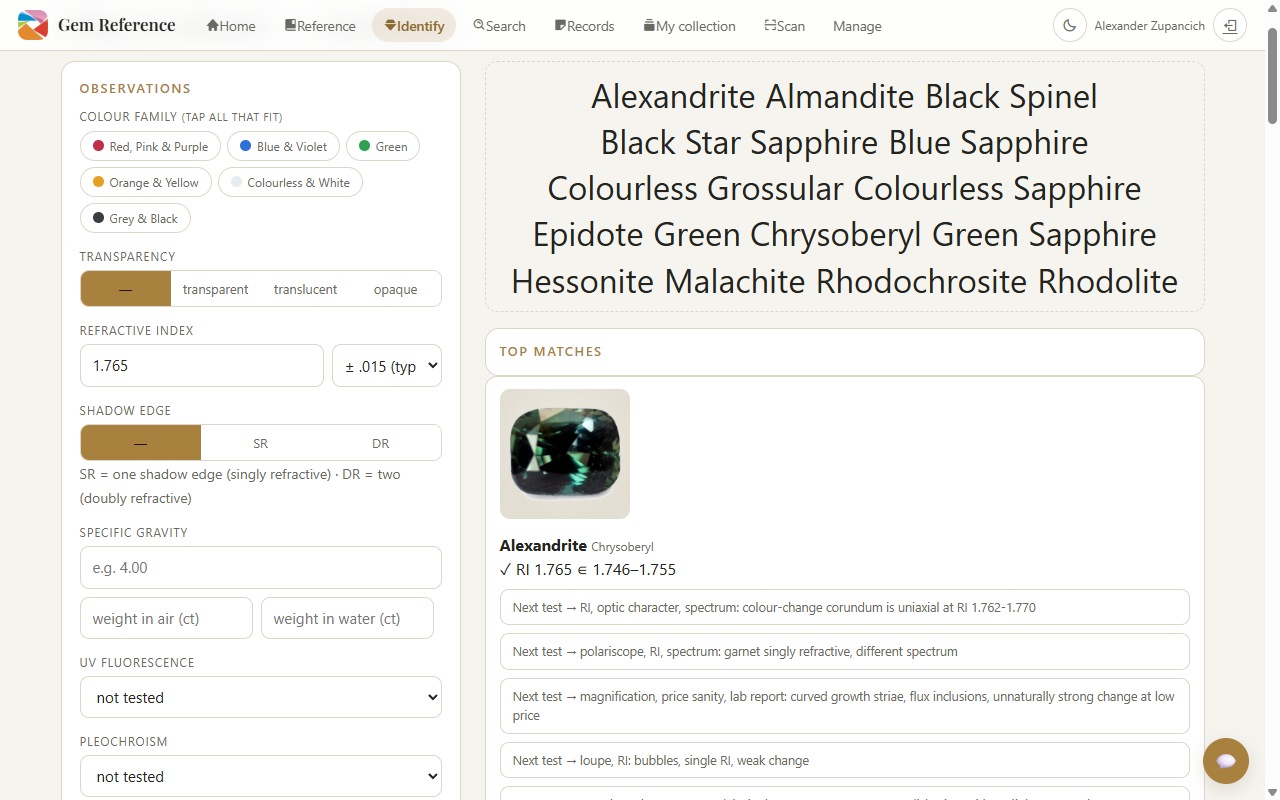
The school's identification wizard: the same colour-clarity-optics sequence students run on real stones in GT200.
Where to learn diamond grading in Singapore
JDMIS teaches diamond grading inside two gemmology courses. GT100 Gem and Jewellery Trade Secrets covers value factors and trade practice, the commercial frame the 4Cs sit in. GT200 Gem Identification Methods is the hands-on course: diamond testers and screeners, fluorescence testing for natural versus synthetic material, evidence of treatments, and the full instrument workflow with practice on up to 100 gems. GT200 is where the certificate terms stop being vocabulary and become things you can verify yourself.
Common questions
Is a diamond grading certificate the same as an appraisal?
No. A grading report describes the stone (weight, colour, clarity, cut, treatments). An appraisal states a value for a purpose such as insurance. Some Singapore laboratories do both; grading is global-standard, appraisal depends on purpose and market.
Can lab-grown diamonds get grading certificates in Singapore?
Yes. IGI and GIA both grade lab-grown diamonds, and Singapore retailers commonly sell them with IGI reports, disclosed and laser-inscribed on the girdle.
How do I learn to tell natural from lab-grown diamonds?
Detection is instrument work: fluorescence patterns, magnification of growth features and spectroscopy. Screening instruments flag candidates; laboratories confirm. The workflow is taught in JDMIS GT200 Gem Identification Methods.
Learn this properly — gemmology at JDMIS, Singapore
Everything on this page is taught hands-on at JDMIS with real stones:
- Gemmology: Secrets of the Gem & Jewellery Trade (GT100) — covers diamond value factors and trade practice, the foundation the 4Cs sit on
- Gem Identification Methods (GT200) — hands-on instrument work: refractometer, specific gravity, microscope and UV, the way professionals actually identify stones.
Free tools while you read: Gem Globe (where stones come from) · Name That Gem (test your eye) · our guide to every Singapore gem laboratory.
Educational content by the gemmology faculty of the Jewellery Design & Management International School (JDMIS), Singapore. Gemmological constants quoted are standard reference values.