Gem Reference › Learn › UV lamp guide
The UV Lamp, Explained
Fluorescence: the screening glow that flags synthetics, dyes and fillers
Shine ultraviolet light at some gemstones and they answer with visible glow. That answer costs nothing but attention: the lamp asks a question no eye can ask, and stones that look identical in daylight can answer it differently.
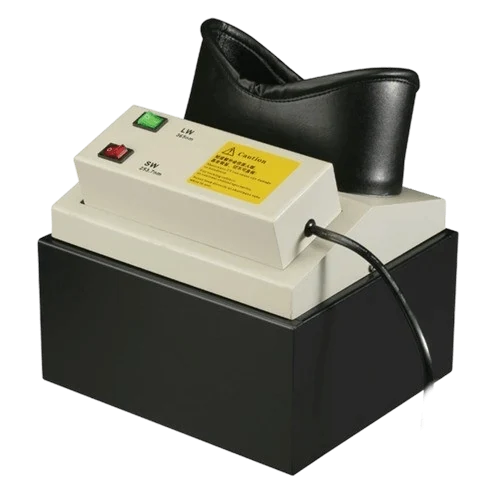 The UV lamp: longwave and shortwave sources, and a stone answering with glow.
Two lamp types matter. Longwave UV (LW, the kind in cheap torches and nightclub lights) and shortwave UV (SW, more informative and more demanding to use safely). You darken the room, hold the stone in the beam, and read three things: does it glow, what colour, and how strongly. What fluorescence settles in practice:
| Reading | What it flags |
|---|---|
| Glow where the daylight stone looked uniform | Dye and filler detection: treated jade and pearls often answer patchily where the body should glow |
| Different pattern between stones sold as sisters | Natural vs synthetic screening: growth conditions leave different fluorescence signatures |
| Inert (no glow at all) | Also data: many stones never glow, and the absence can support or break a candidate |
Screening, not proof
The word to hold onto is screening. Fluorescence flags differences worth a closer look; it does not convict. Synthetic diamonds can pass a casual UV check, natural stones can glow in unexpected colours, and money decisions still go to a laboratory. Singapore's testing options are profiled in our gem labs guide; the lamp tells you when the trip is justified.
Safety, briefly
Never look into a shortwave UV source, and never point it at anyone's eyes. Shield the beam to the stone, keep sessions short, and tinted protection for long sessions is standard practice. Longwave torches are gentler and still earn their place in the sequence.
Where it sits in the sequence
The UV lamp is a sorter after the numbers: refractive index, density and the light instruments cut the list first, and fluorescence then interrogates what remains, especially anything treated, assembled or synthetic-suspect.
Learn it hands-on
- GT200 Gem Identification Methods: fluorescence screening on real stones, treated and untreated.
- Gem testing laboratories in Singapore: where UV-flagged questions get answered for money.
- How to identify jade: dye detection in practice on the material most often treated.
- All eight identification tools: what each one measures and who realistically needs it.
Learn this properly, gemmology at JDMIS, Singapore
Everything on this page is taught hands-on at JDMIS with real stones:
- Gemmology: Secrets of the Gem & Jewellery Trade (GT100): UV fluorescence screening is part of the instrument habits GT100 builds on treated and synthetic material
- Gem Identification Methods (GT200): hands-on instrument work: refractometer, specific gravity, microscope and UV, the way professionals actually identify stones.
Free tools while you read: Gem Globe (where stones come from) · Name That Gem (test your eye) · our guide to every Singapore gem laboratory.
Educational content by the gemmology faculty of the Jewellery Design & Management International School (JDMIS), Singapore. Gemmological constants quoted are standard reference values.