Gem Reference › Learn › Dichroscope guide
The Dichroscope, Explained
The ten-second colour-direction test that separates look-alikes
Some coloured stones show a different colour depending on which direction you look through them. The dichroscope makes that behaviour visible in one glance: it splits the view into two windows side by side, and the two windows show the two rays at once.
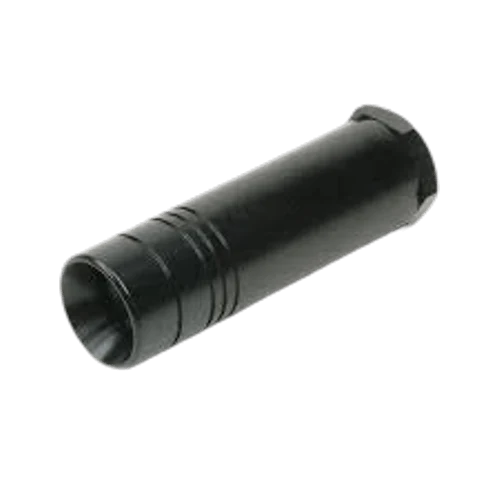 The dichroscope: a calcite window (or polarizing filters) that shows two colours at once.
The instrument is a short tube with either a cleavage of calcite or a pair of polarizing filters inside. You hold it to your eye, press the stone against the far end against a light, and rotate. Three readings cover the practical cases:
| What you see | Reading | What it tells you |
|---|---|---|
| Two windows, same colour | No pleochroism (or very weak) | Spinel, garnet, glass and other cubic or amorphous material |
| Two windows, two different colours | Pleochroic | Corundum, tourmaline, tanzanite, andalusite: the directionally coloured families |
| Colour changes strength, not hue | Weak pleochroism | Common in lightly coloured stones; read the body colour first |
The sorter it is famous for
Red corundum and red spinel confuse eyes and photographs. The dichroscope does not care how similar they look: corundum shows pleochroism, spinel does not. Two windows of the same red points to spinel. A red and an orangey-red points to corundum. It is a ten-second sort that would take a property lookup any other way.
What it cannot do
It reads coloured transparent stones. Colourless stones give two identical windows and nothing more. Opaque material does not transmit the light. And the reading alone never names a stone: it narrows families, and the refractometer, specific gravity and loupe finish the job. Dyed material can also muddy the picture by adding a single strong colour, one more reason the sequence runs several instruments rather than one.
Where it sits in the sequence
After the numbers, with the polariscope. Refractive index and density cut the list to a few candidates. The dichroscope then separates the ones that share numbers but not crystal behaviour. That pairing habit, a number followed by a behaviour, is what instrument training at JDMIS drills from the first session.
Learn it hands-on
- GT200 Gem Identification Methods: the full instrument sequence on real stones, dichroscope included.
- The polariscope, explained: the sibling light test that splits singly from doubly refractive.
- All eight identification tools: what each one measures and who realistically needs it.
- How to identify gemstones: the full workflow, from loupe to laboratory.
Learn this properly, gemmology at JDMIS, Singapore
Everything on this page is taught hands-on at JDMIS with real stones:
- Gemmology: Secrets of the Gem & Jewellery Trade (GT100): the dichroscope is one of the eight instruments GT100 students handle in their first term
- Gem Identification Methods (GT200): hands-on instrument work: refractometer, specific gravity, microscope and UV, the way professionals actually identify stones.
Free tools while you read: Gem Globe (where stones come from) · Name That Gem (test your eye) · our guide to every Singapore gem laboratory.
Educational content by the gemmology faculty of the Jewellery Design & Management International School (JDMIS), Singapore. Gemmological constants quoted are standard reference values.